LATEST
All analysis →
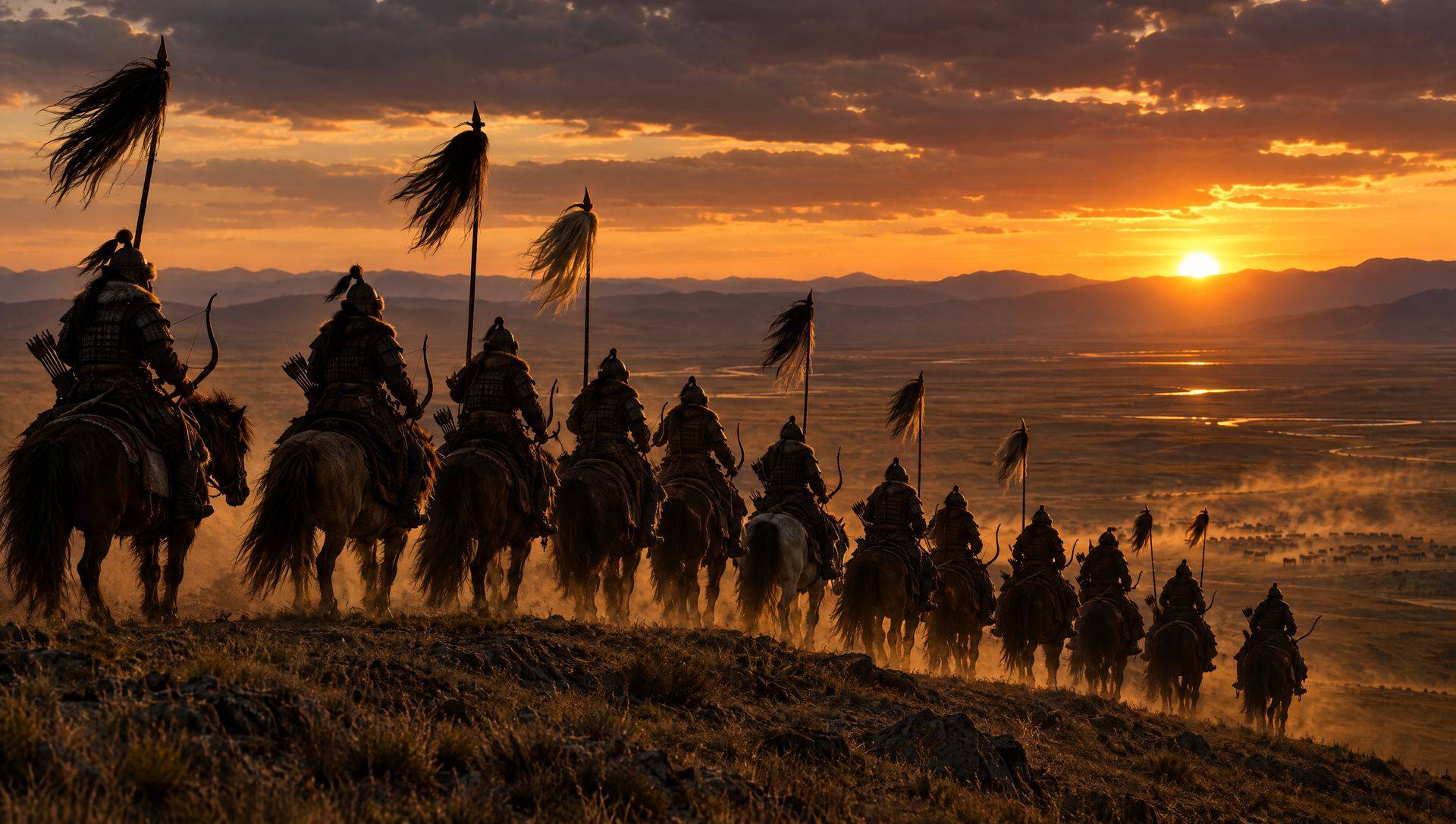
Mounted riders with banners on a ridge at sunset

History

Mongolia through its own eyes

We tell the history the way Mongolians tell it. Our main source is the museum, and we invite you to visit it.

As shown at the Chinggis Khaan National Museum, Ulaanbaatar

Stop 1

Deer stones and the Bronze Age

c. 3000–700 BC
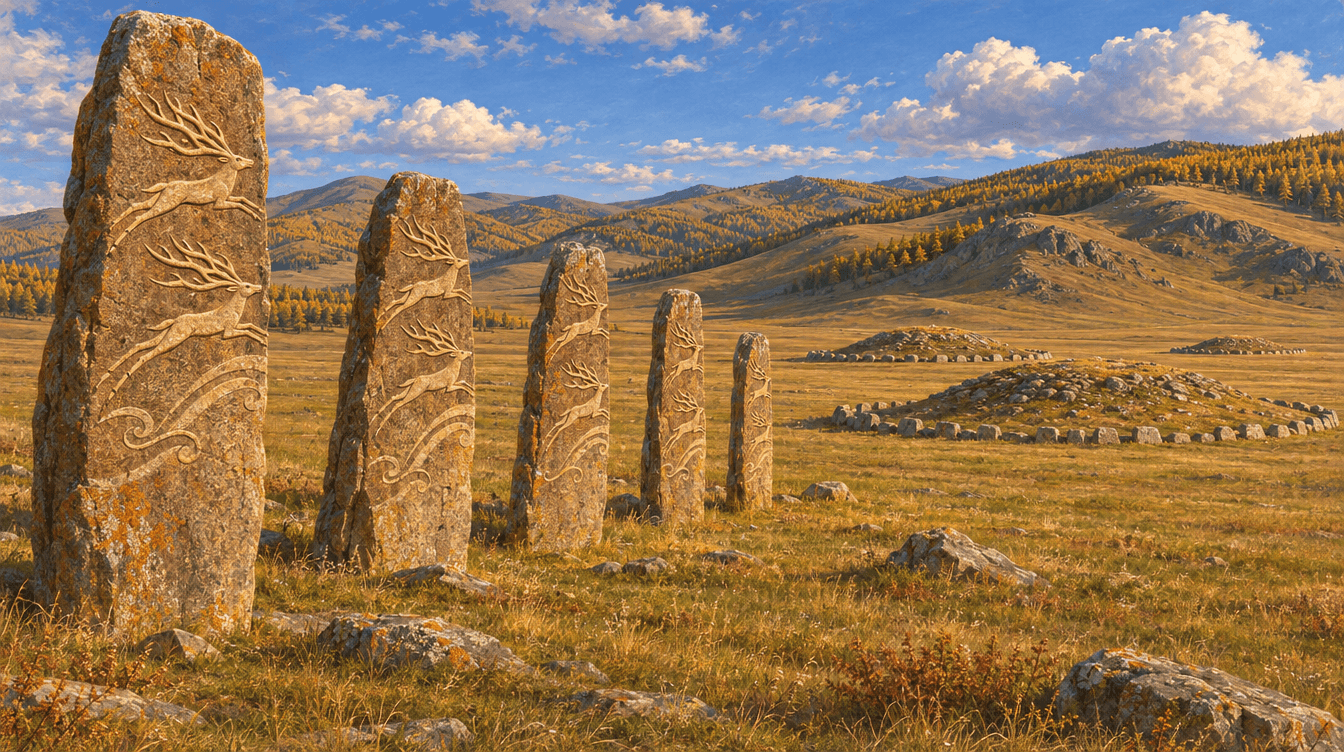
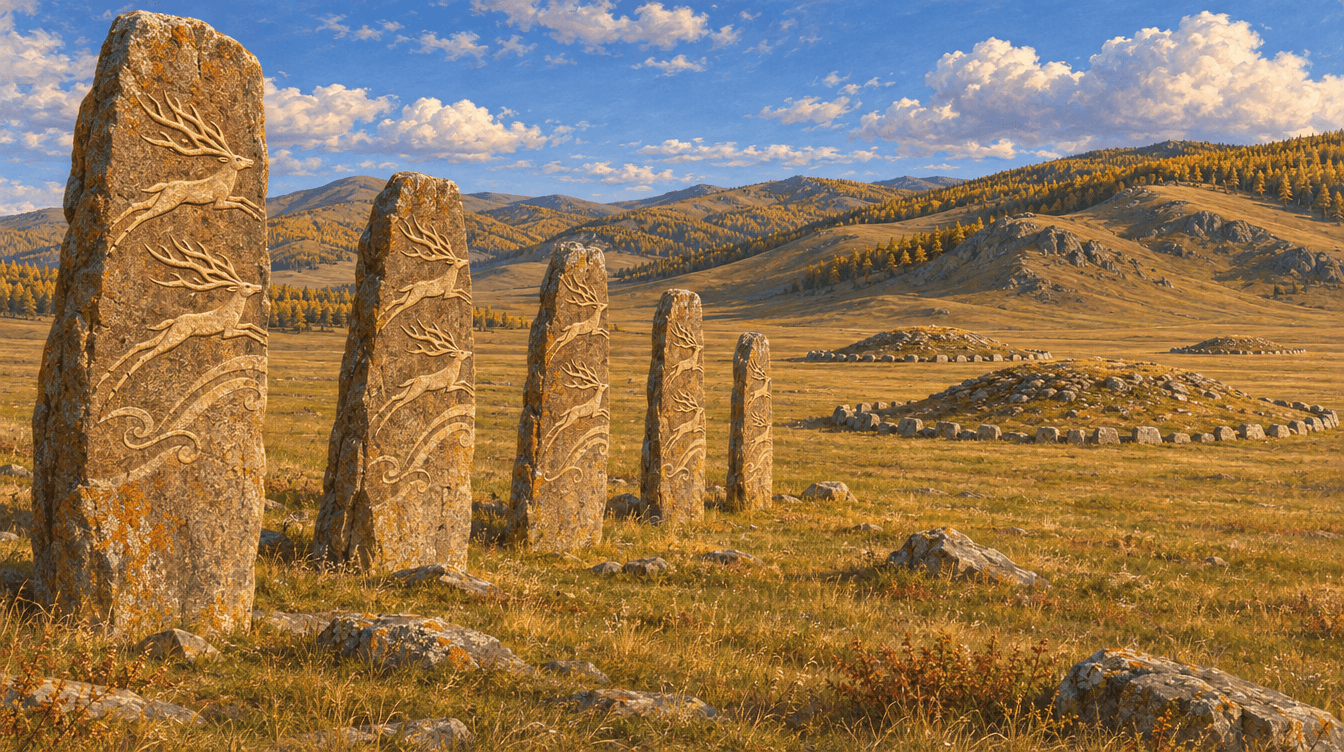
Artist's impression of deer stones and khirgisüür burial mounds on the steppe. Not a photograph.
Artist's impression of deer stones and khirgisüür burial mounds on the steppe. Not a photograph. Image: Mongolia Unspun

Before any state, people here raised more than 1,300 deer stones, about 90% of all known in the world, along with slab graves and khirgisüür burial mounds.

Sources: Chinggis Khaan National Museum, Ulaanbaatar (panels photographed 18 Nov 2026), floor 3

Next stop: 2. Xiongnu: the first state →
Stop 2

Xiongnu: the first state

209 BC – AD 93
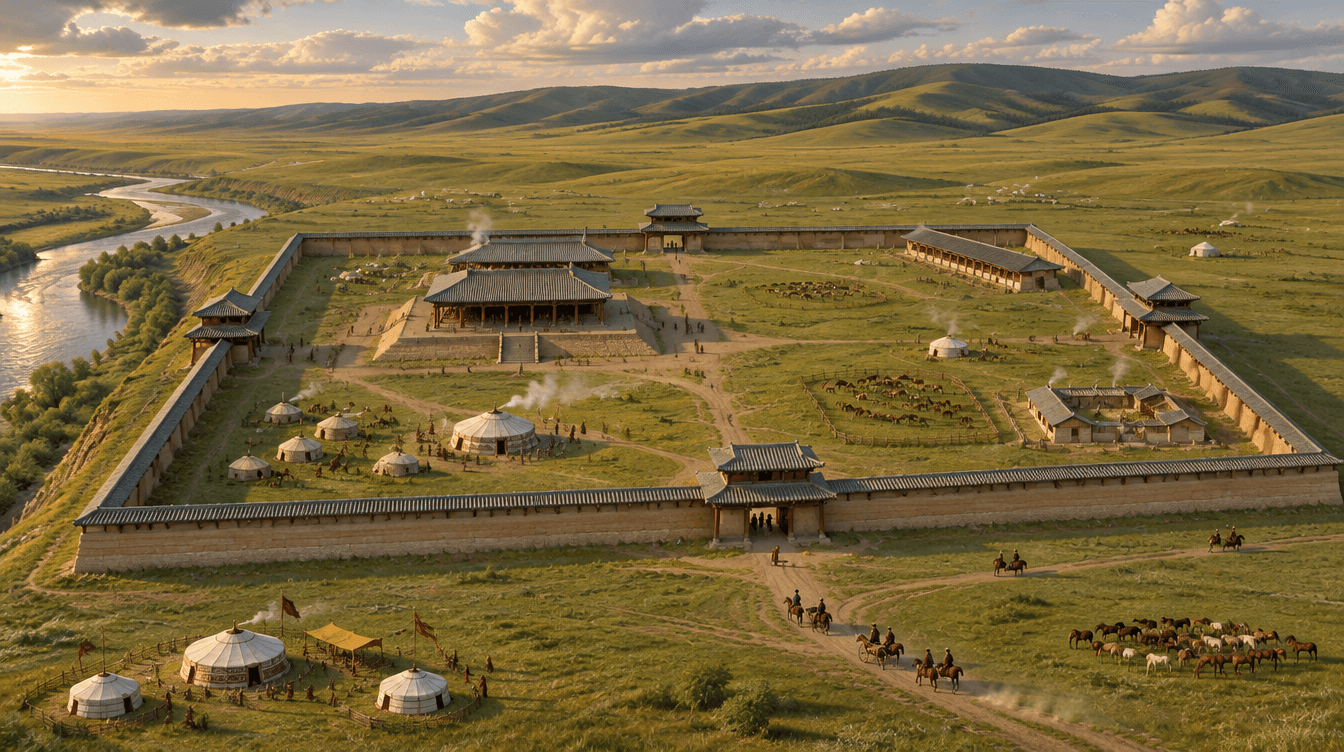
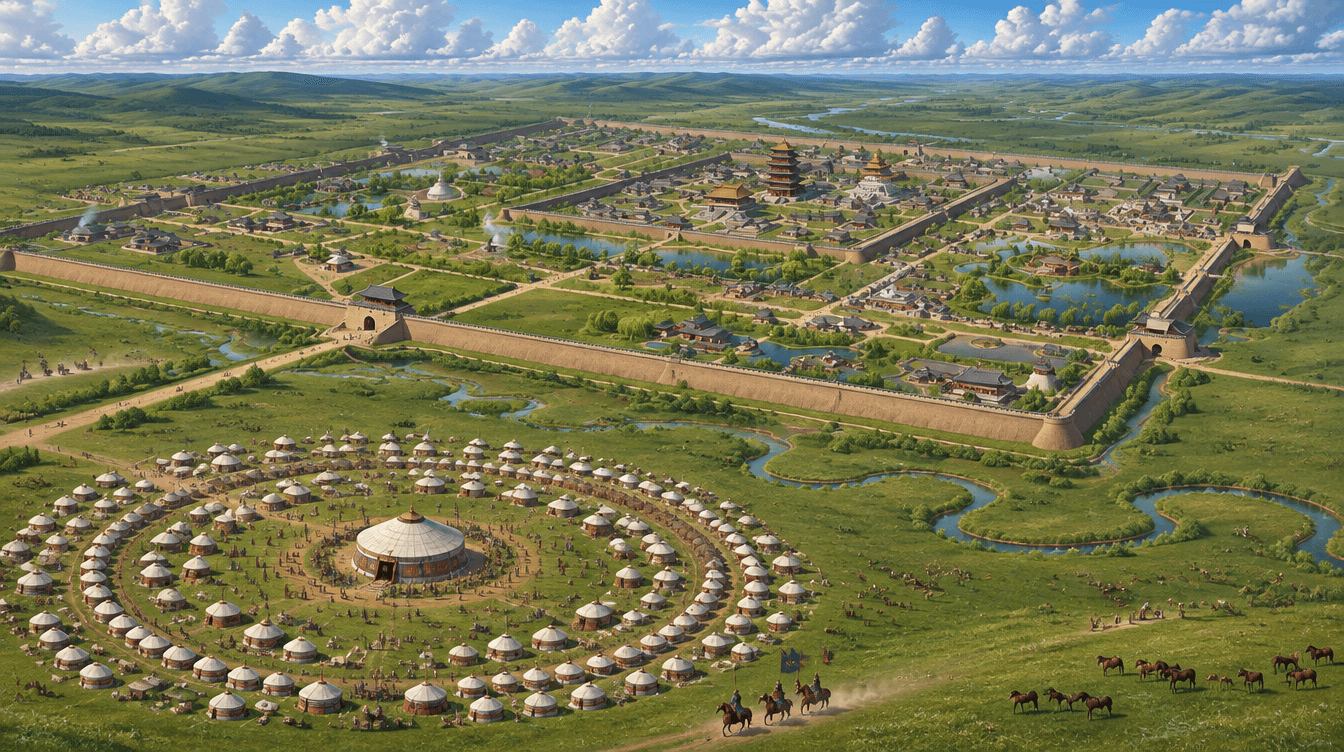
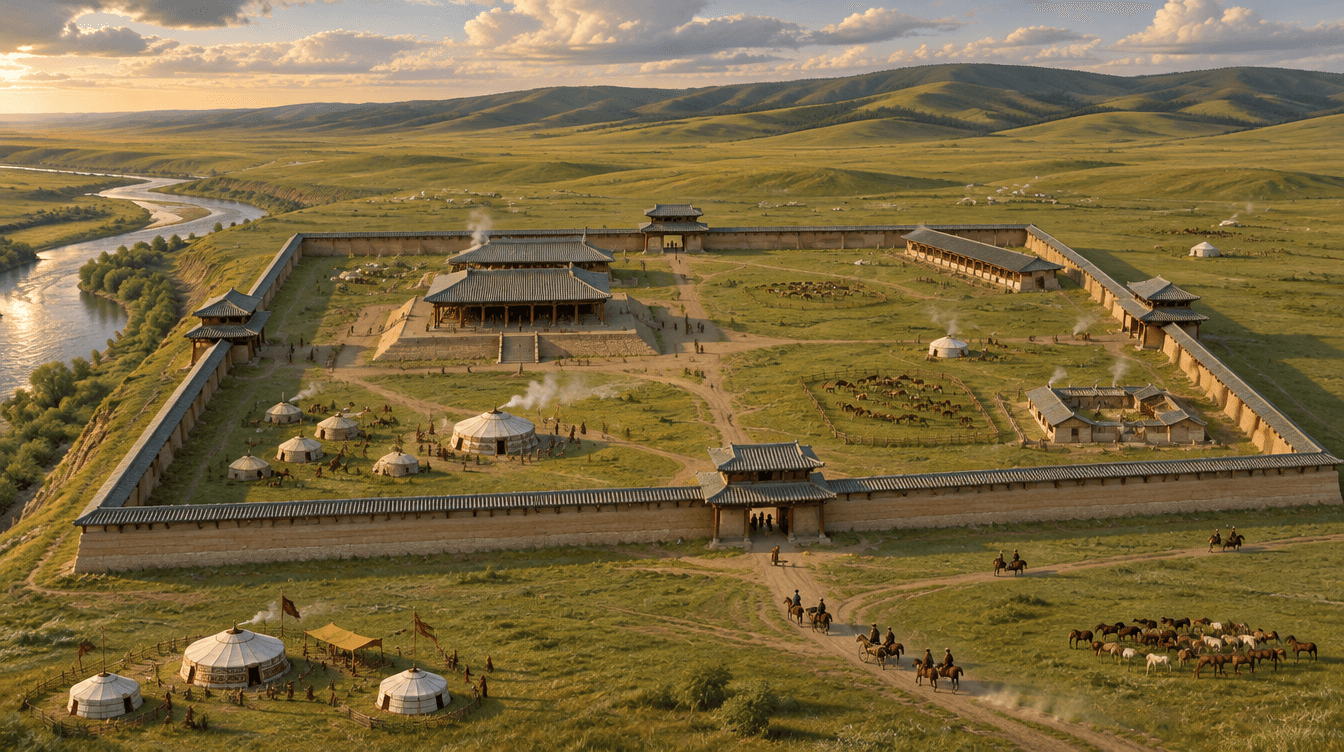
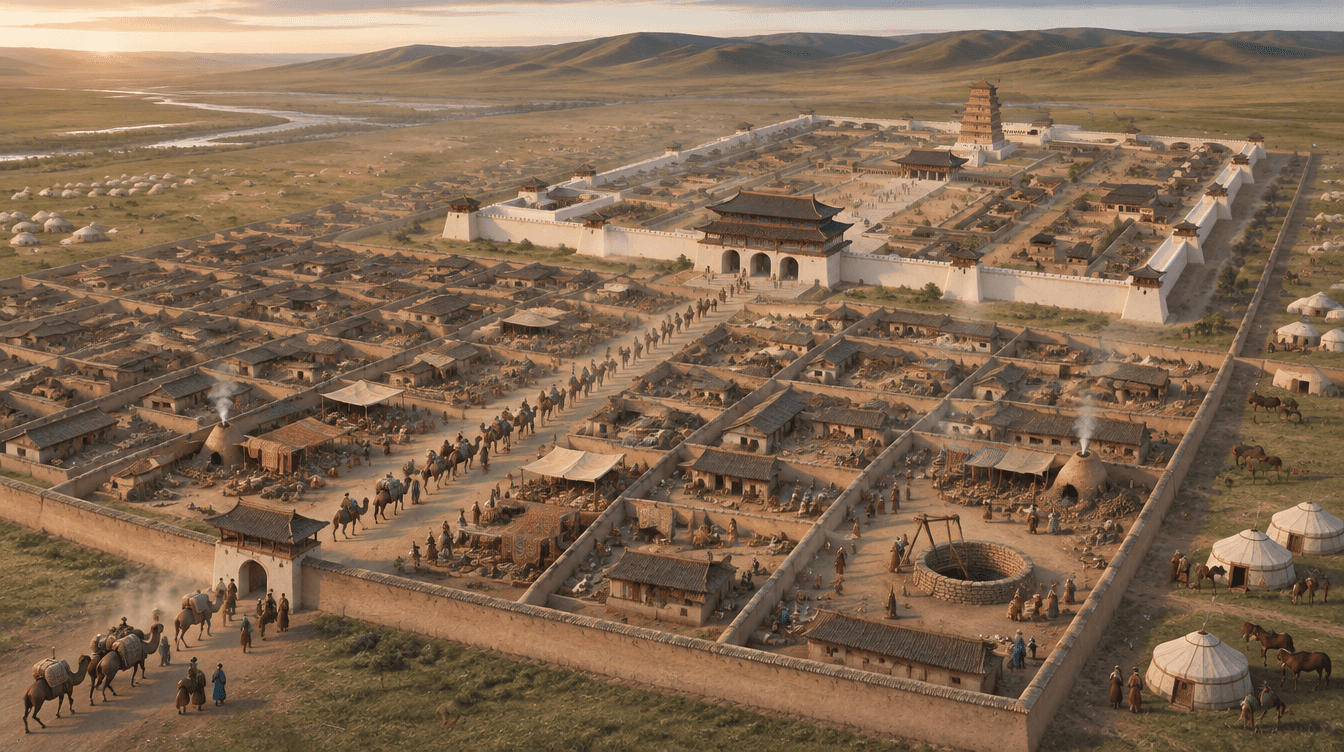
Artist's impression of the Gua dov summer palace, based on the museum model and the site. Not a photograph.
Artist's impression of the Gua dov summer palace, based on the museum model and the site. Not a photograph. Image: Mongolia Unspun

In 209 BC Modun shanyu founded the Xiongnu state, which the museum counts as the start of Mongolian statehood. "Land is the root of the state." A decimal army, left and right wings, and seasonal palaces such as Gua dov.

Rulers
  1. Түмэн BC 220-209 Unified
  2. Модунь BC 209-174 Unified
  3. Лаошан BC 174-161 Unified
  4. Жюньчэнь BC 161-126 Unified
  5. Ижыше BC 126-114 Unified
  6. Үвэй BC 114-105 Unified
  7. Үшылү BC 105-102 Unified
  8. Шюйлиху BC 102-101 Unified
  9. Жюйдихөү BC 101-96 Unified
  10. Хүлүгү BC 96-85 Unified
  11. Хуяньди BC 85-68 Unified
  12. Шюйлү Чуаньчюй BC 68-60 Unified
  13. Воянь Чюйди BC 60-58 Unified
  14. Жыжы BC 56-36 Rivals
  15. Түчи BC 58-56 Rivals
  16. Хуже BC 57 Rivals
  17. Чөли BC 57-56 Rivals
  18. Үжи BC 57-56 Rivals
  19. Рүньжэнь BC 56-54 Rivals
  20. Илиму BC 49 Rivals
  21. Хуханьше BC 58-31 Unified
  22. Фүжулэй Руоди BC 31-20 Unified
  23. Сөүше Руоди BC 20-12 Unified
  24. Чөя Руоди BC 12-8 Unified
  25. Үжулю Руоди BC 8-AD 13 Unified
  26. Үлэй Руоди AD 13-18 Unified
  27. Худүэршы Даогао Руоди AD 18-46 Unified
  28. Үдадихөү AD 46 Unified
  29. Пүнү AD 46-48 Northern
  30. Ёулю AD ?-87 Northern
  31. Умардын шаньюй AD 88-91 Northern
  32. Үчужянь AD 91-93 Northern
  33. Фөнхөү AD 94-118 Northern
  34. Хуханьше II AD 48-55 Southern
  35. Мо AD 55-56 Southern
  36. Хань AD 57-59 Southern
  37. Жу AD 59-63 Southern
  38. Сү AD 63 Southern
  39. Жан AD 63-85 Southern
  40. Шюань AD 85-88 Southern
  41. Туньтүхэ AD 88-93 Southern
  42. Аньгуо AD 93-94 Southern
  43. Шызы AD 94-98 Southern
  44. Тань AD 98-124 Southern
  45. Ба AD 124-128 Southern
  46. Шюли AD 128-140 Southern
  47. Чөню AD 140-143 Southern
  48. Хулань Руошы Сүйжю AD 143-147 Southern
  49. Илин Руошы Сүйжю AD 147-172 Southern
  50. Түтэ Руошы Сүйжю AD 172-178 Southern
  51. Хужөн AD 178-179 Southern
  52. Чянчюй AD 179-188 Southern
  53. Чыжышы Жухөү AD 188-195 Southern
  54. Шюйбогү Дөүхөү AD 188-189 Southern
  55. Хучучюань AD 195-216 Southern
  • Debated The Xiongnu language is not known; scholars propose several language families.

Sources: Chinggis Khaan National Museum, Ulaanbaatar (panels photographed 18 Nov 2026), floor 3, photos 129–130, 145

Next stop: 3. Xianbei →
Stop 3

Xianbei

AD 2nd–4th c.

Tanshihuai united the steppe in the 2nd century and defeated the Han in 177. Xianbei lines (Murong, Tuoba, Tuyuhun) went on to rule well beyond the steppe.

Rulers
  1. Таньшихуай 155-181 Xianbei being checked
  2. Хөлянь 181-185 Xianbei
  3. Күйтөү 185-187 Xianbei
  4. Будүгэнь 187-234 Xianbei
  5. Кэбинэн ?-235 Xianbei (Kebineng)
  6. Мохуба 220-245 Murong
  7. Мүянь 245-271 Murong
  8. Шөгүй 271-283 Murong
  9. Шань 283-285 Murong
  10. Хүй 285-333 Murong
  11. Шызү 219-277 Tuoba
  12. Жан ван 277-286 Tuoba
  13. Пин ван 286-293 Tuoba
  14. Сы ван 293-294 Tuoba
  15. Жао ван 294-307 Tuoba
  16. Хуаньди 295-305 Tuoba
  17. Муди 295-316 Tuoba
  18. Вэньпинди 316 Tuoba
  19. Айди 316 Tuoba
  20. Тайзү 316-321 Tuoba
  21. Хуйди 321-325 Tuoba
  22. Янди 325-329 and 335-337 Tuoba
  23. Леди 329-335 and 337-338 Tuoba
  24. Гаозү 338-376 Tuoba
  25. Туюйхүн 284-317 Tuyuhun
  26. Тү-янь 317-329 Tuyuhun
  27. Е-янь 329-351 Tuyuhun
  28. Сүйши 351-371/376 Tuyuhun
  29. Шылянь 371/376-390 Tuyuhun
  30. Шыпи 390-400 Tuyuhun
  31. Үхэти 400-405 Tuyuhun
  32. Шулуогань 405-417 Tuyuhun
  33. Ачай 417-424/426 Tuyuhun
  34. Мүкүй 424/426-436 Tuyuhun
  35. Мули-янь 436-452 Tuyuhun
  36. Шы-инь 452-481 Tuyuhun
  37. Дү-ихөү 481-490 Tuyuhun
  38. Фүляньчөү 490-529/540 Tuyuhun
  39. Хөлуожэнь 529-530 Tuyuhun
  40. Фофү 530-534 Tuyuhun
  41. Көдажэнь 534-535 Tuyuhun
  42. Куалюй 535/540-591 Tuyuhun
  43. Шыфү 591-597 Tuyuhun
  44. Фүюнь 597-635 Tuyuhun
  45. Шүнь 635; 635-636 Tuyuhun
  46. Нуохөбо 635-672; 636-688 Tuyuhun

Sources: Chinggis Khaan National Museum, Ulaanbaatar (panels photographed 18 Nov 2026), floor 3, photo 149

Next stop: 4. Rouran: the first khagan →
Stop 4

Rouran: the first khagan

330–555

The Rouran ruler Shölün (394–410) was the first to take the title khagan, later carried by Turkic and Mongol rulers. Armoured cavalry.

Key figures

  • Shölün card coming
  • Debated The Rouran state is dated from 330 by some and from 402 by others.

Sources: Chinggis Khaan National Museum, Ulaanbaatar (panels photographed 18 Nov 2026), floor 3, photo 153

Next stop: 5. The Turkic khaganates →
Stop 5

The Turkic khaganates

555–745

The Turkic khaganate ruled from the Orkhon valley. Bilge khan's shrine (735) held a gold crown with a garuda and 1,878 silver items. The Khüis tolgoi stele, about 1,400 years old, is read as the oldest monument of the Mongolian language.

Key figures

  • Bilge khan card coming
  • Debated Some scholars read the Khüis tolgoi language as Mongolic; others are not yet convinced.

Sources: Chinggis Khaan National Museum, Ulaanbaatar (panels photographed 18 Nov 2026), floor 4

Next stop: 6. The Uyghur khaganate →
Stop 6

The Uyghur khaganate

745–840
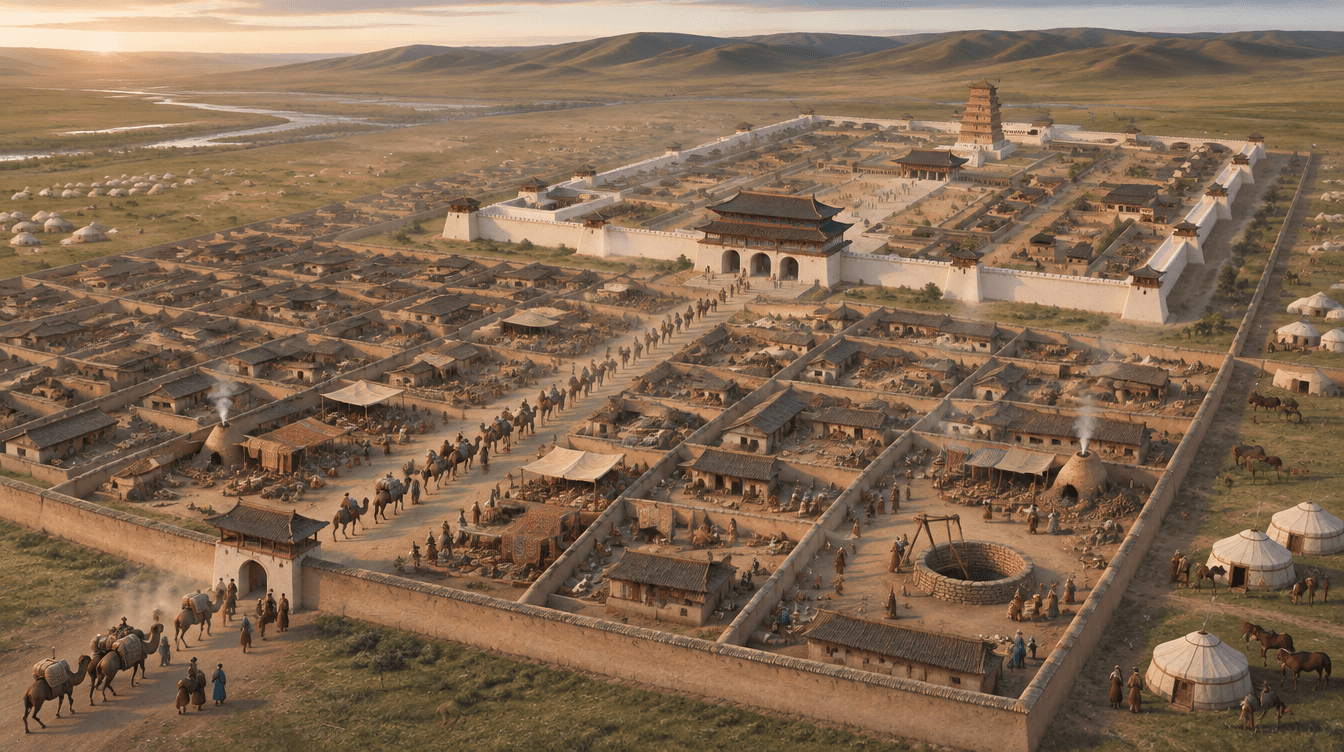
Artist's impression of Khar balgas (Ordu-Baliq), based on the museum model and the site. Not a photograph.
Artist's impression of Khar balgas (Ordu-Baliq), based on the museum model and the site. Not a photograph. Image: Mongolia Unspun

Its capital, Ordu-Baliq (Khar balgas) on the Orkhon, covered about 32 km². The museum presents it as the largest Silk Road city of its time.

Sources: Chinggis Khaan National Museum, Ulaanbaatar (panels photographed 18 Nov 2026), floor 4, photo 118

Next stop: 7. Kitan (Liao) and Kara Khitai →
Stop 7

Kitan (Liao) and Kara Khitai

907–1218

Abaoji founded the Liao state. The Kitan created a large script (920) and a small script (925). After 1125 the Kara Khitai carried the line west, until 1218.

Key figures

  • Abaoji card coming
  • Debated The Liao state is dated from 907 by some and from 916 by others.

Sources: Chinggis Khaan National Museum, Ulaanbaatar (panels photographed 18 Nov 2026), floor 4

Next stop: 8. From the Khamag Mongol to the Great Mongol State →
Stop 8

From the Khamag Mongol to the Great Mongol State

1101–1259
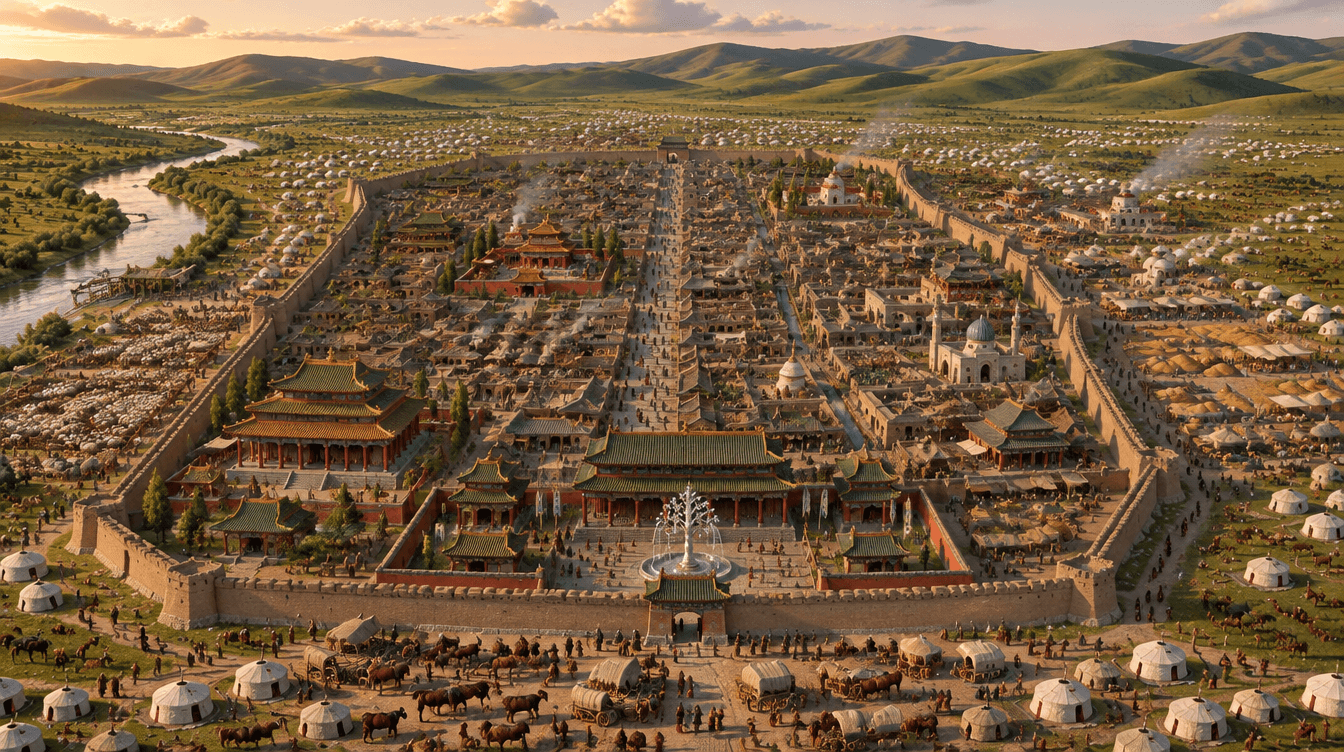
Artist's impression of Karakorum, based on the museum model and the site. Not a photograph.
Artist's impression of Karakorum, based on the museum model and the site. Not a photograph. Image: Mongolia Unspun

Twenty-two generations run from Börte Chono to Chinggis. Khabul khan united the Khamag Mongol in 1147. Temüjin, born in 1162, was proclaimed Chinggis Khaan in 1206. The Ikh Zasag law and the Uighur-Mongol script followed, and Karakorum became the capital.

The line, generation by generation
  1. Börte Chono (Бөртэ чоно) 0 gen.
  2. Batachikhan (Батачихан) 1 gen.
  3. Tamacha (Тамача) 2 gen.
  4. Khorichar mergen (Хоричар мэргэн) 3 gen.
  5. Uujim borokhul (Ууҗим борохул) 4 gen.
  6. Sali khachagu (Сали хачагу) 5 gen.
  7. Ikh nüden (Их нүдэн) 6 gen.
  8. Sem sochi (Сэм сочи) 7 gen.
  9. Kharchu (Харчу) 8 gen.
  10. Borjigidai mergen (Боржигидай мэргэн) 9 gen.
  11. Torgoljin bayan (Торголжин баян) 10 gen.
  12. Dobu mergen (Добу мэргэн) 11 gen.
  13. Bodonchar (Бодончар) 12 gen.
  14. Barim shiirt Khabachi baatar (Барим шийрт Хабачи баатар) 13 gen.
  15. Menen tudun (Мэнэн тудун) 14 gen.
  16. Khachi khülüg (Хачи хүлүг) 15 gen.
  17. Khaidu (ancestor) (Хайду) 16 gen.
  18. Baishinkhor (Байшинхор) 17 gen.
  19. Tumbinai (Тумбинай) 18 gen.
  20. Khabul khan (Хабул хан) 19 gen.
  21. Bartan baatar (Бартан баатар) 20 gen.
  22. Yesükhei baatar (Есүхэй баатар) 21 gen.
  23. Chinggis Khaan (Чингис хаан) 22 gen.
  • Debated Temüjin's birth year is given as 1155, 1162 or 1167.
  • Debated Karakorum is dated from 1220 by some and from 1235 by others.

Sources: Chinggis Khaan National Museum, Ulaanbaatar (panels photographed 18 Nov 2026), floor 5, photos 73–79 · Chart source: Чингис хааны өв (2012)

Next stop: 9. The empire, the four khanates and the Yuan →
Stop 9

The empire, the four khanates and the Yuan

1206–1368
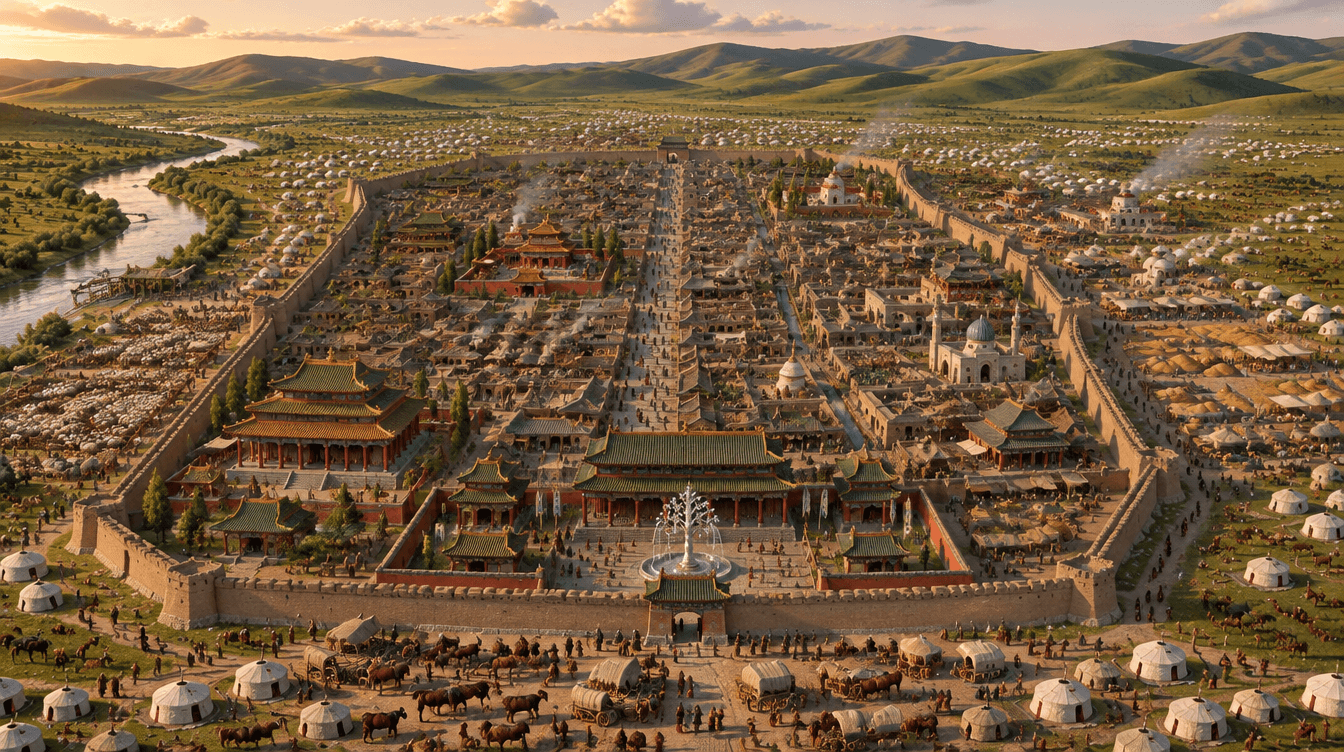
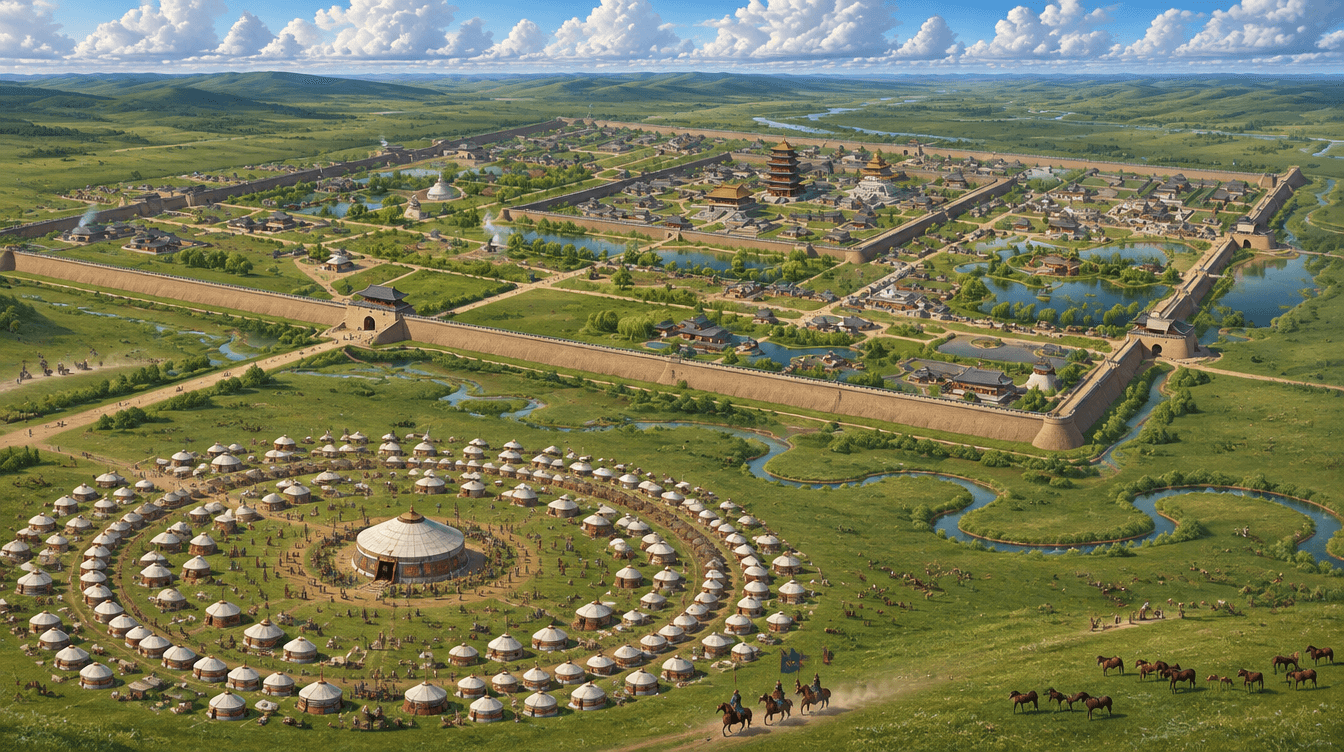
Artist's impression of Shangdu (Xanadu), based on the museum model and the site. Not a photograph.
Artist's impression of Shangdu (Xanadu), based on the museum model and the site. Not a photograph. Image: Mongolia Unspun

Chinggis's four sons received four uluses: the Golden Horde (Jochi), Chaghatai, Ögedei and Tolui's line. Kublai's Yuan (1271–1368) built Shangdu, ran more than 1,500 relay stations and issued paper money. Coins were struck in the khans' names from Crimea to China.

Rulers
  1. Kublai Setsen (Хубилай Сэцэн хаан) 1271-1294
  2. Temür Öljeitü (Төмөр Өлзийт хаан) 1294-1307
  3. Khaishan Külüg (Хайсан Хүлэг хаан) 1307-1311
  4. Ayurbarwada Buyantu (Аюурбарваад Буянт хаан) 1311-1320
  5. Shidebala Gegeen (Шидбал Гэгээн хаан) 1320-1323
  6. Yesün-Temür (Есөнтөмөр хаан) 1323-1328
  7. Aragibag (Ашидхэв хаан) 1328
  8. Khoshila Khutugtu (Хүслэн Хутагт хаан) 1329
  9. Tugh-Temür (Тугтөмөр хаан) 1329-1332
  10. Rinchinbal (Ринчинбал хаан) 1332
  11. Toghon-Temür (Тогоонтөмөр хаан) 1333-1368

Peak area of each state, million km²

Mongol Empire23–24
Mongolia today1.56

Sources: Chinggis Khaan National Museum, Ulaanbaatar (panels photographed 18 Nov 2026), floor 6, photos 59, 70

Next stop: 10. The Great Khans, to Ligden →
Stop 10

The Great Khans, to Ligden

1368–1634
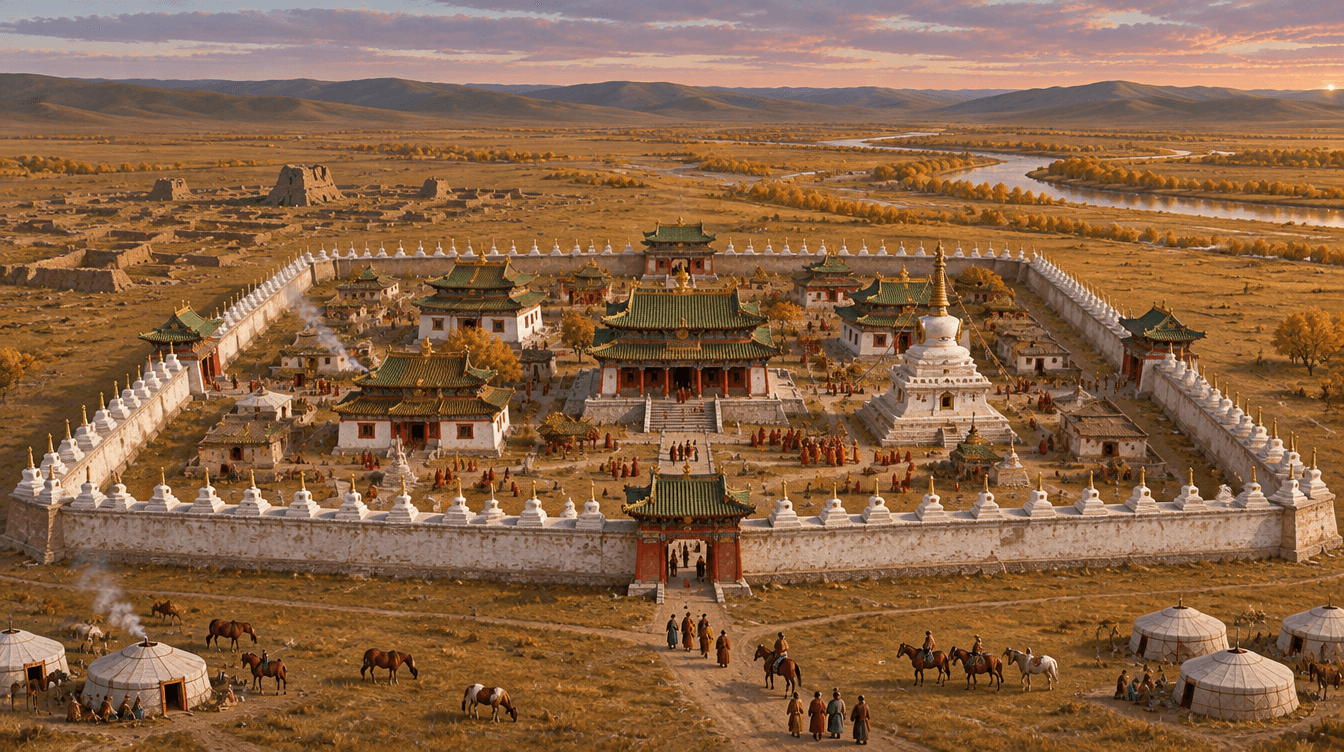
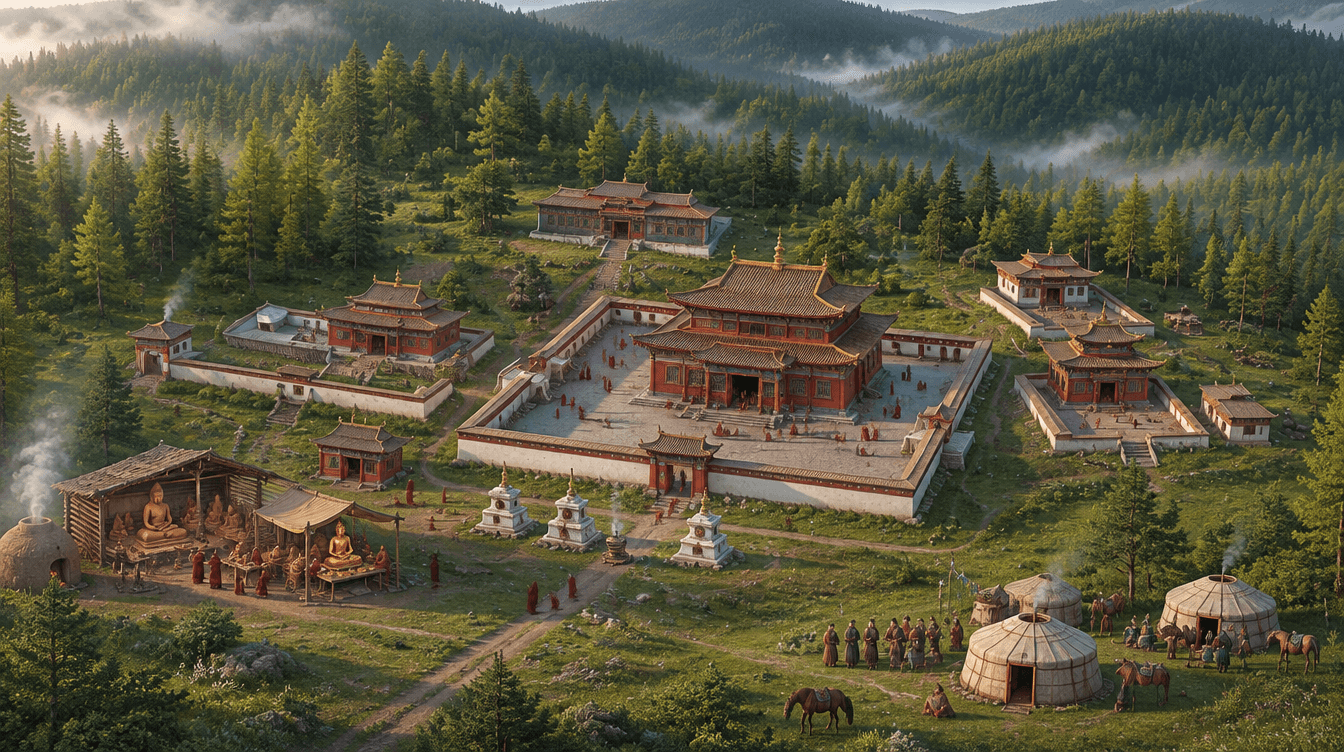
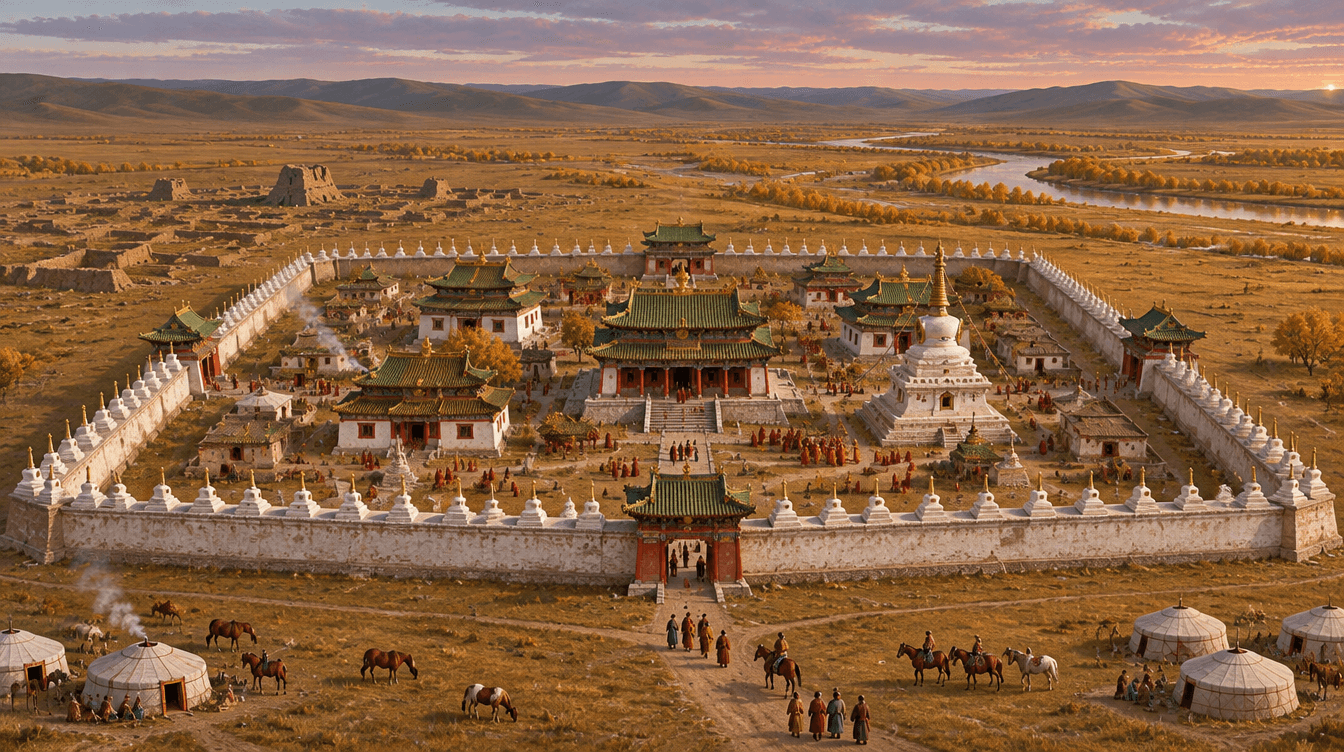
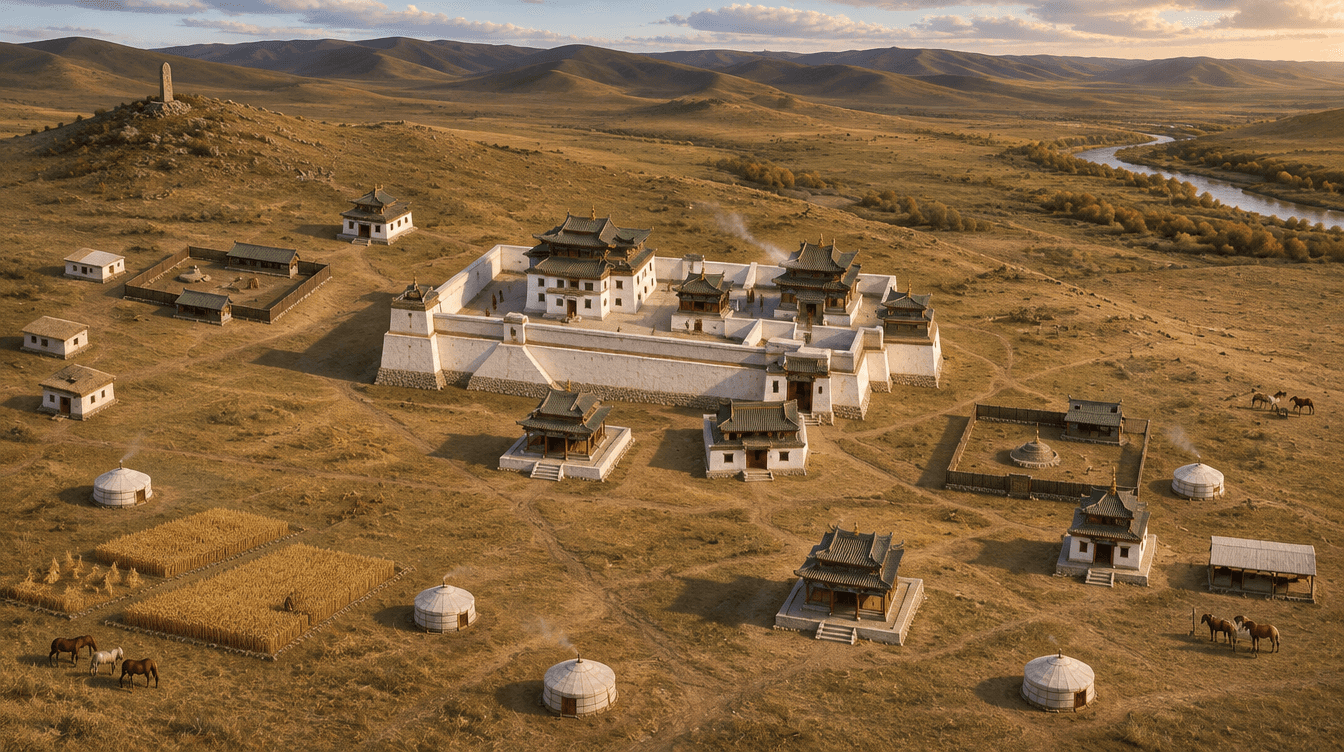
Artist's impression of Erdene Zuu monastery, based on the museum model and the site. Not a photograph.
Artist's impression of Erdene Zuu monastery, based on the museum model and the site. Not a photograph. Image: Mongolia Unspun
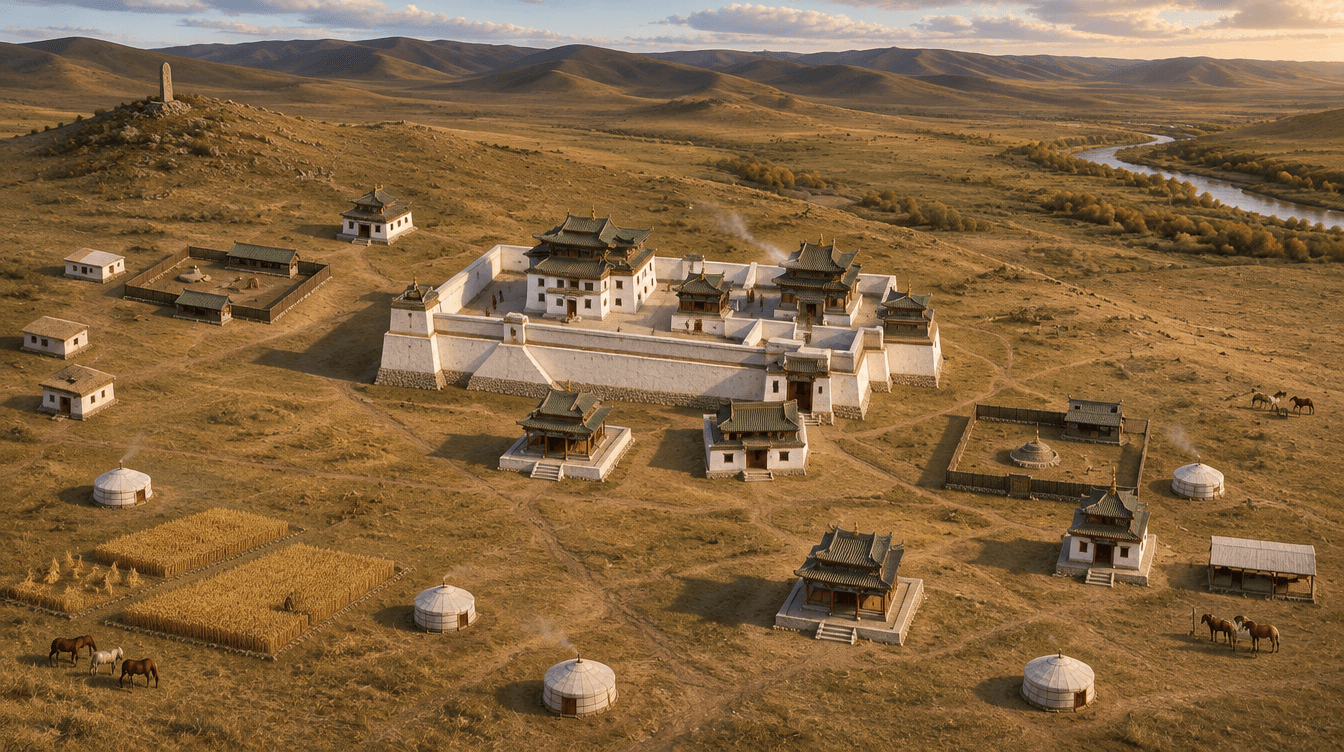
Artist's impression of Tsogt's White House, based on the museum model and the site. Not a photograph.
Artist's impression of Tsogt's White House, based on the museum model and the site. Not a photograph. Image: Mongolia Unspun
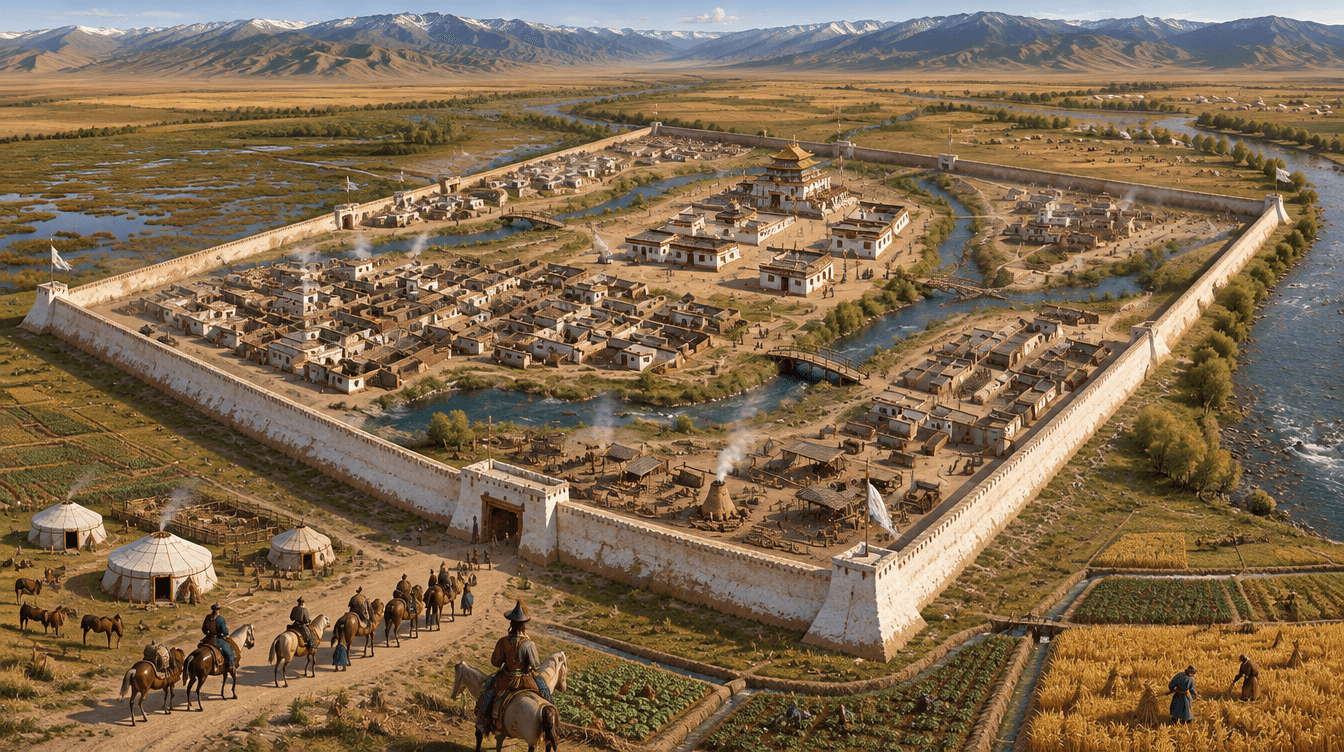
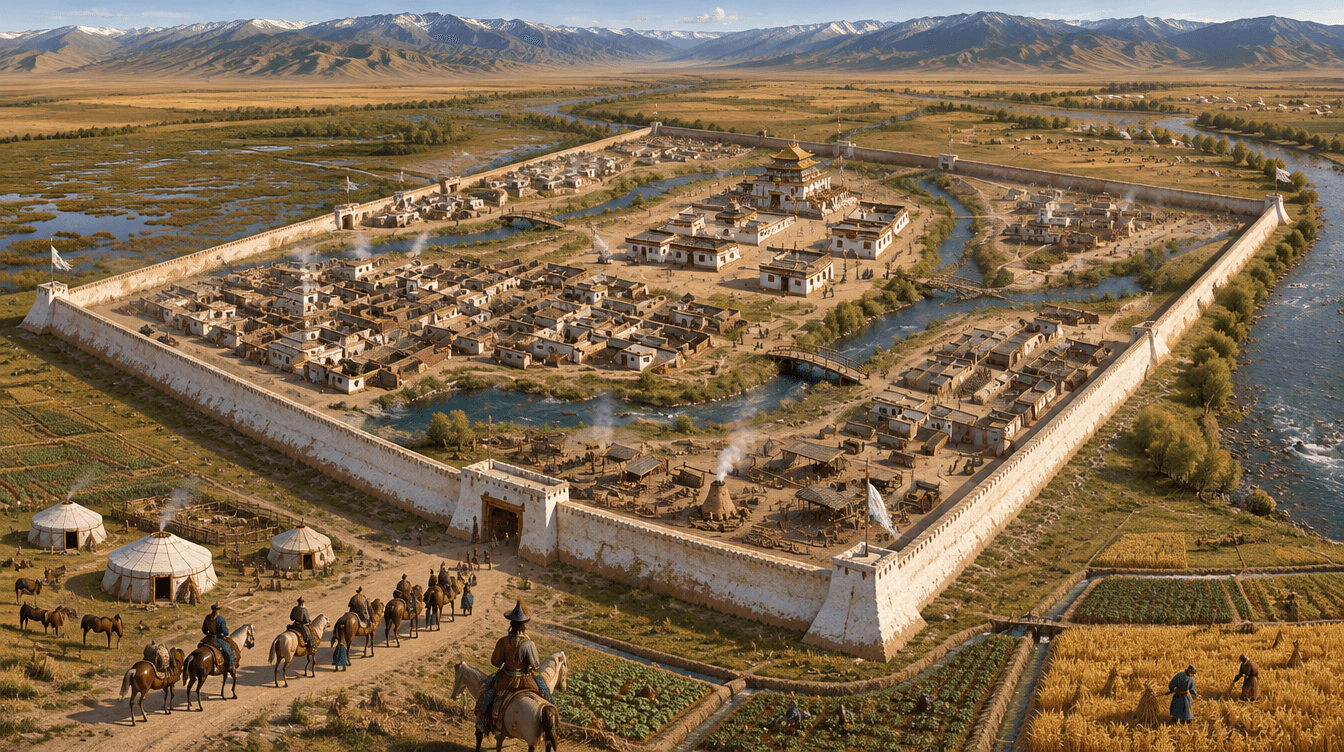
Artist's impression of Tsagaan khot, based on the museum model and the site. Not a photograph.
Artist's impression of Tsagaan khot, based on the museum model and the site. Not a photograph. Image: Mongolia Unspun

After 1368 the khans ruled from the Mongolian steppe: 22 Great Khans from Toghon-Temür to Ligden. Mandukhai and Dayan Khan reunited the Mongols, and Gersenz received Khalkha, the core of today's Mongolia. The museum counts 36 khans over 428 years, 1206–1634.

Rulers
  1. Toghon-Temür (Ukhaant) (Ухаант хаан Тогоонтөмөр) 1333-1370
  2. Ayushiridara (Biligtü) (Аюуширидар Билигт хаан) 1370-1378
  3. Tögüs-Temür (Төгстөмөр хаан) 1378-1388
  4. Enkh-Zorigt (Jorightu) (Энхзоригт хаан) 1389-1392
  5. Elbeg (Элбэг нигүүлсэгч хаан) 1393-1399
  6. Gün-Temür (Гүнтөмөр хаан) 1400-1402
  7. Öljei-Temür (Өлзийтөмөр хаан) 1408-1412
  8. Delbeg (Дэлбэг хаан) 1412-1415
  9. Adai (Адай хаан) 1426-1438
  10. Toghtoa-Bukha Taisun (Тогтобух Тайсун хаан) 1439-1452
  11. Agbarjin jonon (Агбаржин жонон хаан) 1452
  12. Esen taishi (Эсэн тайш) 1452-1455
  13. Mahagürgis (Махагүргис хаан) 1455-1464
  14. Molon (Молон хаан) 1465-1466
  15. Manduul (Мандуул хаан) 1475-1479
  16. Batmönkh Dayan (Батмөнх Даян хаан) 1480-1517 being checked
  17. Barsbold (Барсболд хаан) 1517-1519
  18. Bodi Alag (Бодь Алаг хаан) 1519-1547
  19. Daraisun Güden (Дарайсун Гүдэн хаан) 1548-1557
  20. Tümen Zasagt (Түмэн Засагт хаан) 1558-1592
  21. Buyan Setsen (Буян Сэцэн хаан) 1593-1603
  22. Ligden Khutagt (Лигдэн Хутагт хаан) 1604-1634

Sources: Chinggis Khaan National Museum, Ulaanbaatar (panels photographed 18 Nov 2026), floor 7, photos 32, 37, 41

Next stop: 11. Nobles of Chinggis's line under the Qing →
Stop 11

Nobles of Chinggis's line under the Qing

1634–1911
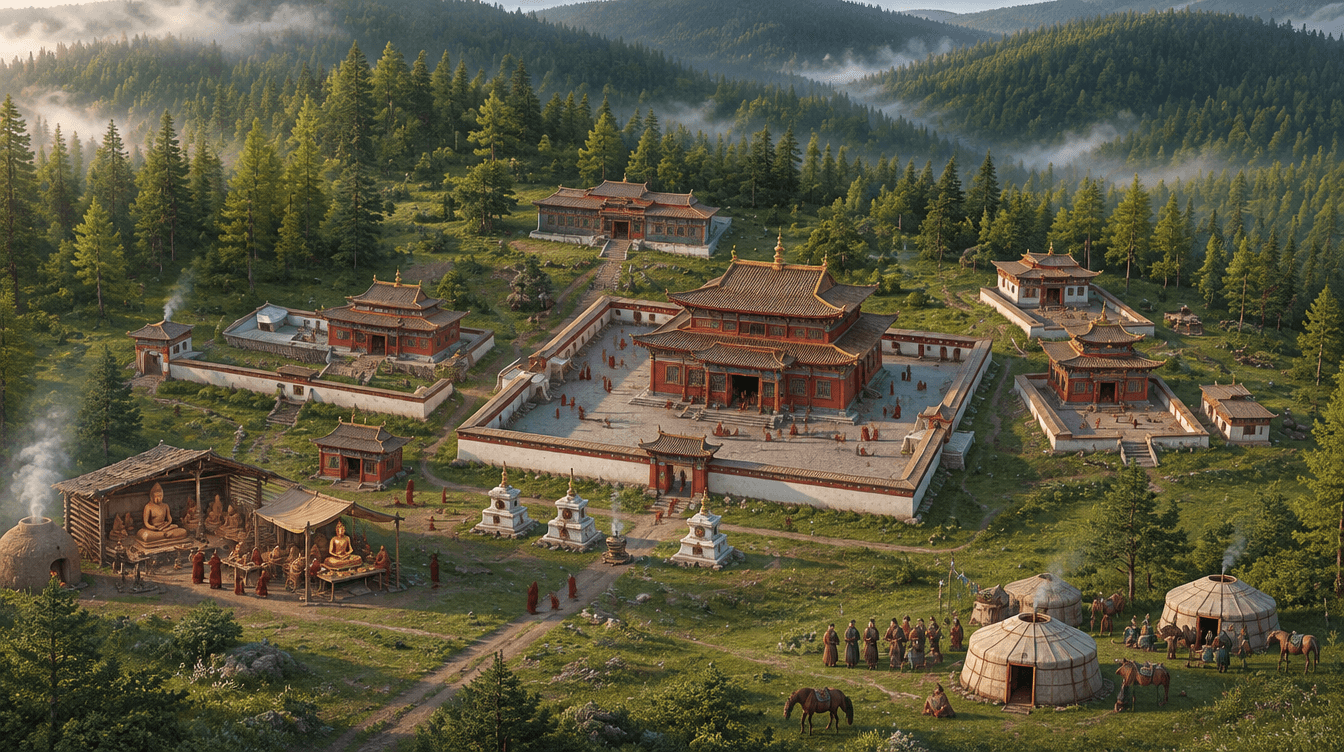
Artist's impression of Sardag monastery, based on the museum model and the site. Not a photograph.
Artist's impression of Sardag monastery, based on the museum model and the site. Not a photograph. Image: Mongolia Unspun

Zanabazar's art and monasteries such as Sardag. Khalkha came under Qing rule from 1691, and its banners grew from 34 to 125. Chingünjav's uprising (1756–57). On 29 December 1911 nobles of Chinggis's line restored independence and enthroned the VIII Bogd.

Key figures

  • Zanabazar card coming
  • Chingünjav card coming
  • VIII Bogd card coming

Sources: Chinggis Khaan National Museum, Ulaanbaatar (panels photographed 18 Nov 2026), floor 7, photo 39

Next stop: 12. 1911–1990: from independence to democracy →
Stop 12

1911–1990: from independence to democracy

1911–1990
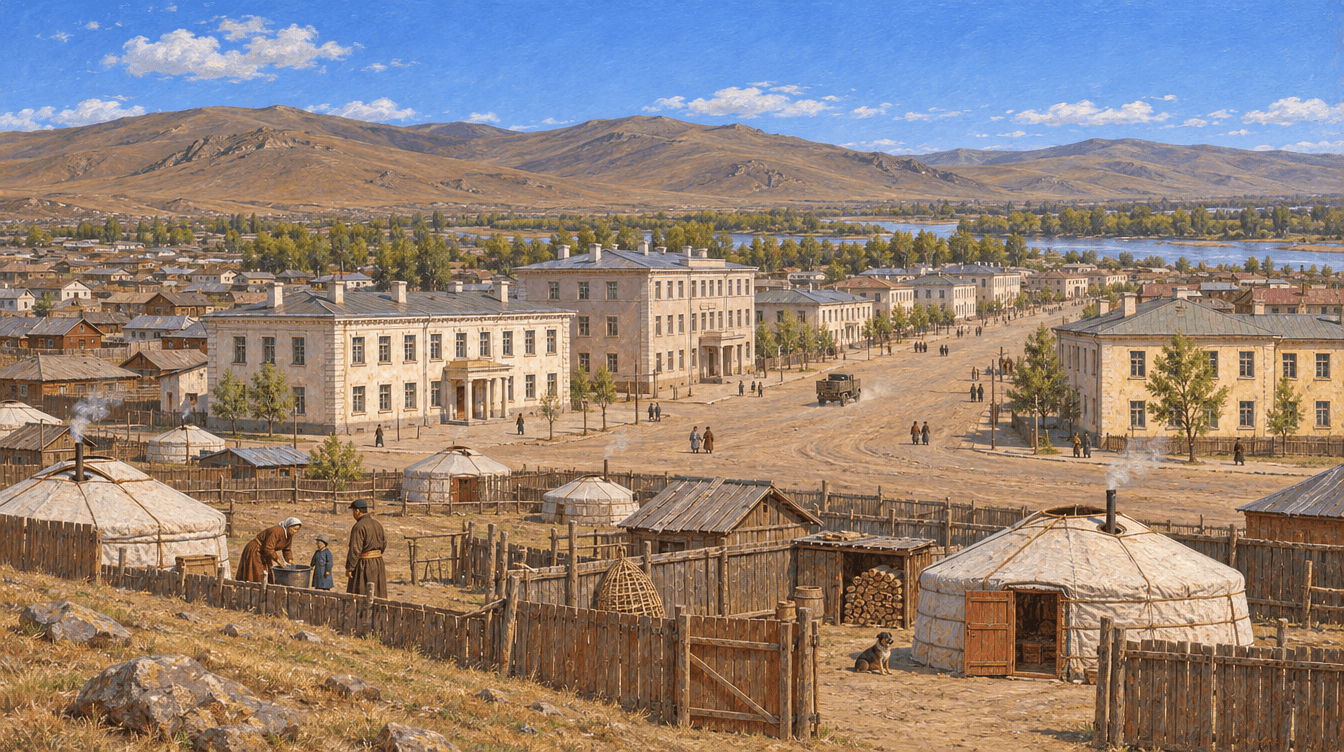
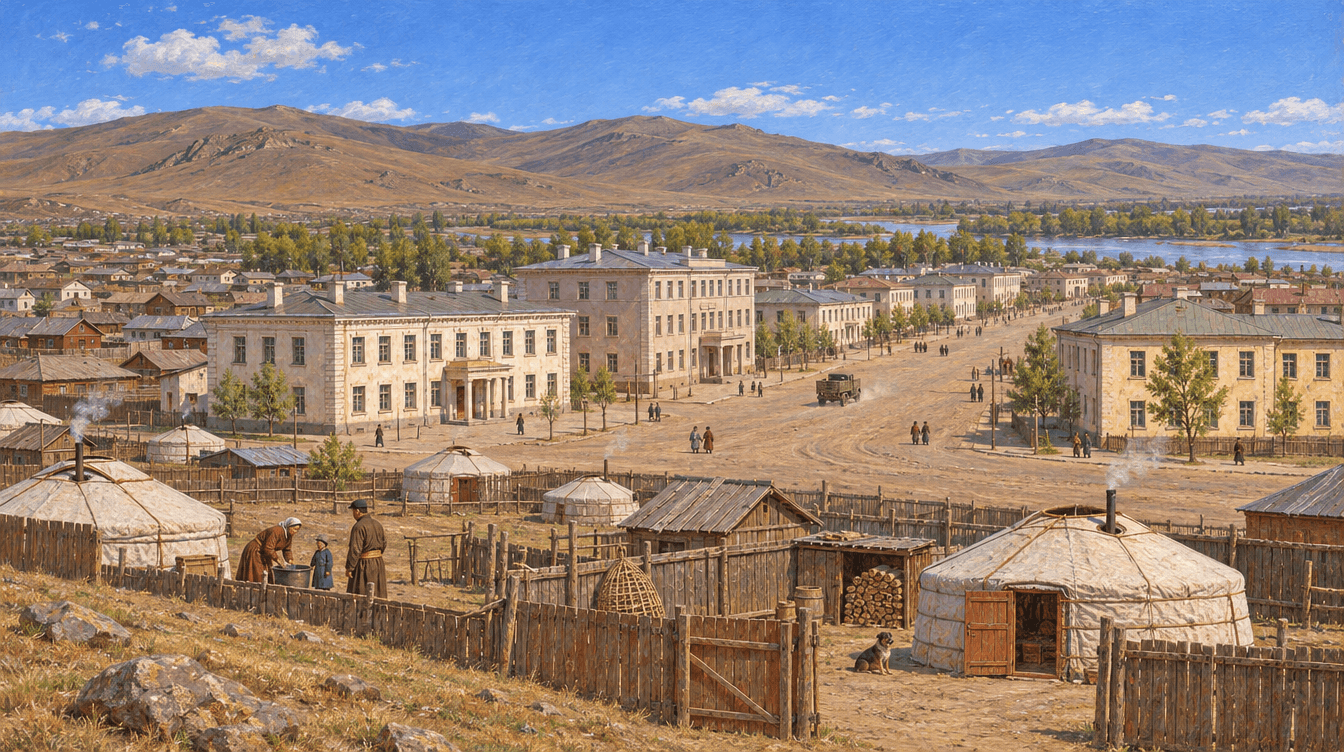
Artist's impression of a Mongolian capital in the mid twentieth century, not a specific place. Not a photograph.
Artist's impression of a Mongolian capital in the mid twentieth century, not a specific place. Not a photograph. Image: Mongolia Unspun

From the 1911 restoration, through 1921 and the People's Republic, to the democratic revolution of 1990. Here the story hands over to Politics & economy.

Sources: Unspun's own sources, not the museum (the museum stops at 1911); text follows as a content item

Back to the start ↑

Follow a thread

Fire, sun and moon → Soyombo → flag

  1. Xiongnu: the first state

    Gold sun and moon ornaments are found in Xiongnu graves.being checked

    Chinggis Khaan National Museum, Ulaanbaatar (panel photographed 18 Nov 2026, floor 3, photos 144–159)
  2. Nobles of Chinggis's line under the Qing

    In 1686 Zanabazar created the Soyombo script. Its first letter, fire, sun and moon above the other signs, became the nation's emblem.being checked

    Chinggis Khaan National Museum, Ulaanbaatar (panel photographed 18 Nov 2026, floor 7, hall introduction, photos 28–30)
  3. 1911–1990: from independence to democracy

    After 1911 officials put away Qing ritual dress and wore the Soyombo on the chest. Today the Soyombo stands on the state flag.being checked

    Chinggis Khaan National Museum, Ulaanbaatar (panel photographed 18 Nov 2026, floor 7, photos 47–54); Constitution of Mongolia (1992), art. 12

Scripts

  1. The Turkic khaganates

    The Khüis tolgoi stele, about 1,400 years old, is written in Brahmi script and read as the oldest monument of the Mongolian language. Bilge khan's stele (735) carries runic and Chinese text.being checked

    Chinggis Khaan National Museum, Ulaanbaatar (panel photographed 18 Nov 2026, floors 3–4)
  2. The Uyghur khaganate

    Under the Uyghurs, runic and Sogdian-derived scripts were carved on stone in the Orkhon valley. The Uyghur script later became the parent of Mongol script.being checked

    Chinggis Khaan National Museum, Ulaanbaatar (panel photographed 18 Nov 2026, floor 4, photo 121)
  3. Kitan (Liao) and Kara Khitai

    The Kitan created a large script in 920 and a small script in 925.being checked

    Chinggis Khaan National Museum, Ulaanbaatar (panel photographed 18 Nov 2026, floor 4, photo 116); Liao shi
  4. From the Khamag Mongol to the Great Mongol State

    Chinggis made the Uighur-Mongol script the script of the state. The Chinggis stone is among the oldest dated texts in it.being checked

    Chinggis Khaan National Museum, Ulaanbaatar (panel photographed 18 Nov 2026, floor 5, photos 94–95)
  5. The empire, the four khanates and the Yuan

    In 1269 Kublai decreed the square Phags-pa script for all the languages of his realm.being checked

    Chinggis Khaan National Museum, Ulaanbaatar (panel photographed 18 Nov 2026, floor 6)
  6. Nobles of Chinggis's line under the Qing

    Zanabazar's Soyombo script (1686) wrote Mongolian, Sanskrit and Tibetan.being checked

    Chinggis Khaan National Museum, Ulaanbaatar (panel photographed 18 Nov 2026, floor 7)
  7. 1911–1990: from independence to democracy

    In the 1940s Mongolia moved to the Cyrillic alphabet. The Mongol script is taught again and used in state documents alongside Cyrillic.being checked

    Law on the Mongolian Language (2015)

Capitals of the Orkhon valley

  1. Xiongnu: the first state

    The Orkhon valley held capitals of successive states, from the Xiongnu on.being checked

    Chinggis Khaan National Museum, Ulaanbaatar (panel photographed 18 Nov 2026, photo 17)
  2. The Turkic khaganates

    Bilge khan and Kül tegin's shrines stand on the east bank of the Orkhon.being checked

    Chinggis Khaan National Museum, Ulaanbaatar (panel photographed 18 Nov 2026, floor 4)
  3. The Uyghur khaganate

    The Uyghur capital Ordu-Baliq (Khar balgas) stood on the Orkhon.being checked

    Chinggis Khaan National Museum, Ulaanbaatar (panel photographed 18 Nov 2026, floor 4, photo 118)
  4. From the Khamag Mongol to the Great Mongol State

    Karakorum, the Great Mongol State's capital, was built in the same valley.being checked

    Chinggis Khaan National Museum, Ulaanbaatar (panel photographed 18 Nov 2026, photos 18, 20)
  5. The Great Khans, to Ligden

    In 1585 Abtai built Erdene Zuu on the site of Karakorum.being checked

    Chinggis Khaan National Museum, Ulaanbaatar (panel photographed 18 Nov 2026, floor 7)
  6. 1911–1990: from independence to democracy

    Today the site lies in Kharkhorin sum. The Orkhon Valley Cultural Landscape has been on UNESCO's World Heritage List since 2004.being checked

    Chinggis Khaan National Museum, Ulaanbaatar (panel photographed 18 Nov 2026, photo 18); UNESCO

Dress

  1. Xiongnu: the first state

    The museum traces the deel back more than 2,000 years, to the Xiongnu. A silk deel from Noyon uul measures 117 × 194 cm.being checked

    Chinggis Khaan National Museum, Ulaanbaatar (panel photographed 18 Nov 2026, floor 3, photo 91)
  2. Kitan (Liao) and Kara Khitai

    A 10th-century burial at Uzuur gyalan held four deels, felt hats and boots.being checked

    Chinggis Khaan National Museum, Ulaanbaatar (panel photographed 18 Nov 2026, floor 4, photo 122)
  3. From the Khamag Mongol to the Great Mongol State

    At Nartyn khad, a 13th-century noblewoman was buried in full dress: a silk deel of gold thread, a fur deel and the tall bogtog hat.being checked

    Chinggis Khaan National Museum, Ulaanbaatar (panel photographed 18 Nov 2026, floor 5, photos 101–102)
  4. The empire, the four khanates and the Yuan

    The 14th-century deel had fine pleats at the waist, a right-lapped collar and narrow cuffs.being checked

    Chinggis Khaan National Museum, Ulaanbaatar (panel photographed 18 Nov 2026, floor 6)
  5. Nobles of Chinggis's line under the Qing

    Under the Qing, a code for Outer Mongolia set the dress of each rank.being checked

    Chinggis Khaan National Museum, Ulaanbaatar (panel photographed 18 Nov 2026, floor 7, photos 47–54)
  6. 1911–1990: from independence to democracy

    After 1911 the Qing ritual dress was put away, and the deel stayed.being checked

    Chinggis Khaan National Museum, Ulaanbaatar (panel photographed 18 Nov 2026, floor 7)

The state seal

  1. From the Khamag Mongol to the Great Mongol State

    Güyük's 1246 letter to Pope Innocent IV carries the seal of the Great Mongol State.being checked

    Chinggis Khaan National Museum, Ulaanbaatar (panel photographed 18 Nov 2026, floor 5, photo 80)
  2. The Great Khans, to Ligden

    The museum counts 36 khans, from Chinggis to Ligden, who held the great khan's seal over 428 years.being checked

    Chinggis Khaan National Museum, Ulaanbaatar (panel photographed 18 Nov 2026, floor 5, photo 86)
  3. Nobles of Chinggis's line under the Qing

    Under the Qing, each banner kept a square bronze seal in Manchu and Mongol script, with a tiger handle.being checked

    Chinggis Khaan National Museum, Ulaanbaatar (panel photographed 18 Nov 2026, floor 7, photo 52)
  4. 1911–1990: from independence to democracy

    After 1911 the Qing seals were replaced by silver seals with a chandmani handle.being checked

    Chinggis Khaan National Museum, Ulaanbaatar (panel photographed 18 Nov 2026, floor 7, photo 52)

The human cost: conquest, purges and wars (estimates are wide)

Mongol conquests, 1206–c.1300, all theatres (deaths and population decline)

Very uncertain: about 30 million (Rummel ~29.9 million democide, 13th–15th c.), ~37.75 million population decline (Matthew White, 2012), up to 40–60 million (McEvedy & Jones 1978, as cited by Wikipedia). Scholars stress these include famine and disease and rest on weak census data.

Population decline of China under Mongol conquest (13th century)

Registered population fell from roughly 100–120 million to about 60–70 million (Morgan: ~100m → 70m; Wikipedia summary: ~120m → ~60m by the 1300 census). Mote and Brook argue part of the fall reflects lost or evaded registration, not deaths.

Conquest of Khwarazm and eastern Iran, 1219–1221 (Bukhara, Samarkand, Herat, Tus, Nishapur, Merv, Urgench)

Britannica: cities razed 'and the whole populations were slaughtered'. Medieval chroniclers give 700,000 at Merv (Ibn al-Athir) — regarded as exaggerated; one modern compilation estimates ~1.25 million killed in Khwarazm (~25% of 5 million).

Sack of Baghdad, February 1258

200,000 (figure attributed to Hülegü) to 800,000–2,000,000 (medieval Muslim historians); modern scholars think epidemic deaths may have inflated these figures. The caliph was executed and the Abbasid caliphate ended.

Invasion of the Rus principalities, 1237–1241

Kyiv (est. 50,000 people) reduced to about 200 houses after the 1240 sack (Wikipedia); Britannica confirms the sacking and burning of Kyiv in 1240. No reliable overall toll found.

Destruction of the Tangut Western Xia, 1227

Tangut forces 'virtually annihilated' (LoC); John Man calls it an early attempted genocide (cited by Wikipedia). No reliable death toll found.

Black Death, 1346–1353 (spread along Mongol-era routes; not a Mongol action)

25–50 million deaths in Europe, 30–60% of the population (Wikipedia); up to ~60% in affected regions (Max Planck).

Qing destruction of the Dzungar (Oirat Mongol) state, 1755–1758

About 420,000–480,000 deaths, 70–80% of a population of ~600,000 (Wikipedia, citing Wei Yuan: 40% smallpox, 30% killed, 20% fled). Dates confirmed by LoC; the death figure rests on one compiled source.

Forced collectivisation and confiscations, 1929–1932

About 7 million livestock slaughtered by herders in three years; more than 700 heads of household killed or imprisoned (LoC); about 30,000 people fled the country (RFE/RL).

Battles of Khalkhin Gol, May–September 1939

Japanese: 19,714 (official Japanese records) to 29,085–61,000 (Soviet claims); LoC gives ~80,000. Soviet: ~25,655 (9,703 dead or missing). Mongolian: 556–990.

See it for yourself in the halls of the Chinggis Khaan National Museum. As shown at the Chinggis Khaan National Museum, Ulaanbaatar